It is very tough, when making this style of R&B, to walk the line between interesting and relaxing. Jhene Aiko does not. The album is undeniably relaxing. Jhene Aiko is warm. Her music helps unclench. It can even sparkle. However, it is far too easy for it to fade far into the background and once it does, it stays there.
You might notice the few switches it tries. Kendrick is a decent change of pace and Ab-Soul and Tyga also do something a little different from the rest of the album, but there is no real reason to pay attention to this album. It never falls below a fairly high quality level, but it quickly becomes ambient music and never does anything more.
Ari’s latest album is very solid but completely unmemorable music. She sings well throughout. Her production is great. If you want some new Ariana music, this album has you covered. If you want something that sticks, this album has nothing for you. It has none of the charm of her Wicked work nor the honesty of thank u, next. It is just workmanlike, competent pop.
Of course The Durutti Column did as they pleased on their own album. You cannot be a Manchester post-punk band and aim for conventionality. However, they were genuinely different. Who else would do a Brubeck reimagining? Who else would call their debut their return? Who else would copy the Situationist joke of sandpaper covers?
It is wonderful then that this is so listenable. Factory producer Martin Hannett was at his sharpest in this era and The Durutti Column gave him a lot to work with. This is immersive, scene-setting, endlessly interesting music and benefits greatly from expansion and remastering.
Lost Weekend is the best music that Phoebe Bridgers has ever made. She has much more musical experimentation in this album than in her earlier work and the album really benefits for it. In particular, both “Lost Boys” and “Kill Me” are magnificent, layered, immersive indie rock.
However, I’m not parasocial enough to get anything from her lyrics. There are no razor blades in the candyfloss. There are no epigrams. As Tolstoy once wrote, all songs about happy relationships are exactly the same and “Bobby” has no impact as a result.
The result is some truly excellent music but an album that makes little impact. I am still happy to have it on but I do not think I will ever return to it.
I do not need to ever hear about “Mr. Cryptocurrency Scarface.” I do not need a third “NY State of Mind.” I do not need to hear a rapper shout out both the Mets and the Yankees like he is Andrew Cuomo. I do not need “Madmen” to poorly rehash Nas’ older, better work. I do not need the insincerity of “Bouquet.” I absolutely do not need a second crypto song.
This album is not as bad as my complaining. DJ Premier is workmanlike here, as is Nas’ flow. Neither one shows any of the inspiration or effort of their best work, but they can get a groove running every now and again. However, I do not need this album.
I thoroughly enjoyed watching A Hard Day’s Night. I first heard The Beatles before I could speak. Many people do. They’re not just an institution, they are the institution. Every piece of music currently made is in some way in conversation with The Beatles.
So, it’s astonishing to see them as just a bunch of very, very likable lads getting up to hijinks. It’s fun to see Ringo run a visual joke or John rebel against their manager. It’s magical to see the boys they were.
Of course, the magic is the music. The movie finds space for a lot of music and the album finds even more. “And I Love Her” is the first great McCartney ballad and the centerpiece of the movie. John’s edge in “I’ll Cry Instead” and “You Can’t Do That” is emphasized both by his performance in the movie and by the songs being cut from it.
For all four of the Beatles, watching the movie and then revisiting the album has shown me things I never understood about them. The majority of the movie is four lads from Manchester running away from teenage girls and enjoying every moment of it. I wish they had been able to do that forever.
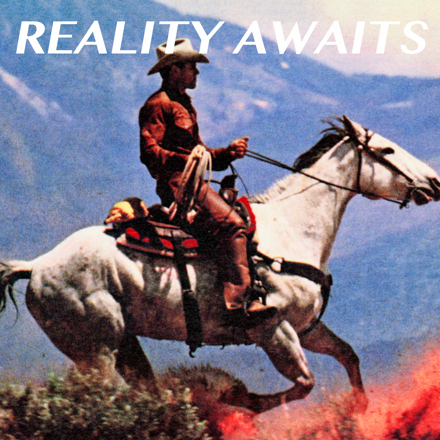
Overnight fame early in one’s career can be a difficult cross to bear. The Strokes stuck the landing on their very first try with Is This It twenty-five years ago, and nearly every release since has followed a similar trajectory in public perception. First, people hate it (“Not as good as Is This It!”); then it grows on them; and finally, in hindsight, the album is heartily accepted as a beloved addition to the discography. It happened to First Impressions of Earth (2006). It happened to Angles (2011). Hell, it even happened to Room on Fire (2003) which is basically an extended cut of Is This It.
It’s no surprise, then, that Reality Awaits has received a lukewarm response at best. Yes, it’s not as approachable as its predecessor, the Grammy-winning The New Abnormal(2020). Yes, it’s more “Voidz-forward” than most of the Strokes’ output so far. But nowhere on this seventh album do the Strokes compromise on the quality of their sound. Nick Valensi and Albert Hammond Jr. on interlocked guitars, Fab Moretti’s metronomic drums, Julian Casablancas’ melodic vocals, Nikolai Fraiture’s tight bass – it’s all there, as perfectly in-step as it was twenty-five years ago. In fact, their sound is arguably more multi-faceted and confident now than it’s ever been.
And sure, let’s get this out of the way first: the Autotune. For the most part (and this may sound like a hot take if you gave up on the album after the jump-scare opener “Psycho Shit”), the Autotune is rather tastefully applied. When Casablancas uses it sparingly as a conscious vocal effect – as on “Going Shopping” or on “Lonely in the Future” – it offers a lackadaisical nonchalance that’s not that different from his classic distortion sound on Is This It or Room on Fire.
It’s also fair to say that there are parts of the album where the Autotune overshadows everything else. “Falling out of Love” features devastating lyrics about drifting away from a person who was probably the love of your life; unfortunately, the egregious Autotune over the song’s entire runtime shrouds everything in an impenetrable cloak of detachment. Album closer “Tyrants of the Mellow Moon” feels hastily stitched together between Autotune-heavy laments and more natural vocals, giving the uncomfortable feel of a human-robot duet.
That being said, it’s important to note that Casablancas’ vocal modulation is always an active artistic choice, rather than a cover-up for a lack of vocal ability. This is unlike, for example, Charli xcx, who freely admits that she uses Autotune out of laziness.
Now that that’s out of the way – Reality Awaits is jam-packed with some of the best songs that the band has ever created. Thematically, the album centers on a Casablancas favorite: the perils and effects of late-stage capitalism. “Dine N’Dash” features moody guitars and Moretti’s machine-like drums around the concept of consuming your way through life without the intention to pay – like the pop-culture trope of millennials endlessly window-shopping on Zillow. “Going Shopping” is an irresistible, summery track with a sharp commentary on the so-called “little treat economy”; it’s no coincidence that they got Walmart ambassador Walton Goggins to star in the music video.
“Lonely in the Future” is a sparkly, fun diss track about unoriginality and lack of artistic appreciation in the music industry. On the bare-bones (no drums!) “Liar’s Remorse”, Casablancas traverses a bewitching array of melodies while commenting on people increasingly absolving themselves of emotional agency (“Listen to the AI tell you what to do today” is not even a farfetched concept anymore).
“Going to Babble On” is probably the most “old-school Strokes” song on the album, full of tight instrumentals and beautiful melodies that keep you hooked from start to finish; never mind that Casablancas is critiquing the lack of critical thinking in society today (“Doesn’t anybody wanna know what’s going on?”). The funky, alluring “Fruits of Conquest” presents a handful of interesting ideas – bongos, an almost bossa-nova groove, and the seeds of defiance (“They don’t obey so we won’t obey”).
In short, Reality Awaits is perfectly named: an eyes-wide-open distillation of what’s happening out in the real world today. Musically, it’s a great continuation from The New Abnormal and, for fellow side-project enjoyers, from the Voidz’ Virtue (2018). Every listen rewards with another layer of the band’s ever-evolving sound: the secret to their continued relevance for twenty-five years and counting. And if you’re still not feeling up to it – well, to quote Julian: “You don’t get it, it’s a pity / Maybe you’ll catch up sooner rather than later.”
Music, Fashion, Film is an album lacking in both good music and good ideas. I do not believe that it achieves a single one of its goals. It’s not an interesting enough experiment, it’s not an honest enough confessional and it’s not good enough as a rock album, a pop album or as a mixture of the two.
She does not have the voice for the rock styles that she chooses. It is particularly bad in the obnoxious and boring opener “Rock Music” that would be appropriative were it not so slight. It gets no better with the following “SS26” that adds a shallow cynicism and a hollow mock-profundity to the already uninteresting music.
The rock in Music, Film, Fashion is superficial. Hyperpop has already taken a great deal from rock. 100 gecs and Rina Sawayama have both mined ’00s rock to make fascinating music but they were able to do that because they clearly grew up with those sounds. Charli was clearly listening to Britney and N*SYNC instead and so she has an incredible ear for modern pop but this album shows no such understanding of rock.
She pulls two great sounds from her rock foray though. The first half of “Card Declined” and the chorus of “I’m Afraid” are both excellent. She gets harsher and harder with her rock and that works much better than the rest of the album. It makes me wish that rather than the anodyne rock she takes from for the acceptable but forgettable “Persona” and “Yeah” she had found Sleater-Kinney and Bikini Kill. I would have loved a Charli riot grrrl album.
She has some other decent music in “wink wink” and “2007”. They are both good Charli pop but nothing novel. “Camera” is more interesting and has both a strong opening and chorus. It also has some of her better lyrics on a very weak album lyrically. I’ve been listening to Charli for a long time. I saw her when she opened for Marina and the Diamonds. I saw her when it was me and a dozen other people at a free concert in the Golden Gate Park. I don’t claim to know her as a result but I can say that she’s much more convincing when she talks about ambition or hedonism than she ever gets in the introspection of this album.
This is fittingly at its worst at the end of the album. “No One Lasts Forever” is boring music and boring thinking and then made much worse by a trite David Cronenberg outro. It, like the rest of the album, is nearly devoid of originality.
Little Simz takes this short, almost entirely collaborative EP to try a more popular sound. It works well. It’s not her most individual or her most interesting work but it’s a new and effective mode for her and a fun 13 minutes.
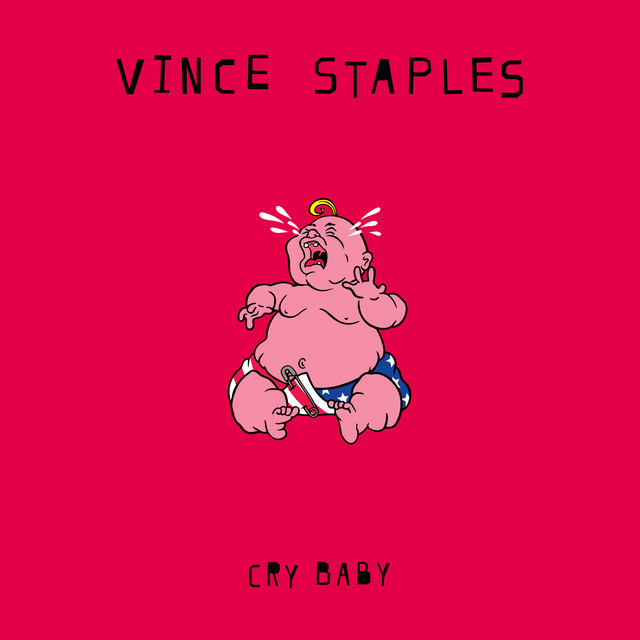
Like all of us, Vince Staples is working through America. He’s not new to this. Baldwin once said that to be conscious is to be in constant rage. Vince is more fatalistic. He holds resignation in the standout chorus “White flag / I don’t wanna fight no more” and yet he cannot help but speak.
He speaks well too. The rapping in Cry Baby is never as challenging as his best work but the album is consistently propulsive and the slight move into party rap for “Go! Go! Gorilla” works well for him as does the combination of funk and politics of the song. Cry Baby is not Vince at his most experimental but it’s nice to see him a bit relaxed and he does great work in any mode.